FINANCIAL GENETIC CODE™
Financial Genetic Code™: Your Financial DNA and its Effect on Your Relationships
Your internal and external ecosystems play a significant role in shaping how you view and interact with money. Internally, your beliefs, emotions, and experiences with money form the foundation of your financial behaviors. Externally, societal influences, family dynamics, and economic conditions further mold your financial mindset and actions.
The by-product of all of these internal and external factors is your financial genetic code™—much like “financial DNA”—which is hard-wired into your brain and plays a role in every aspect of your financial life.
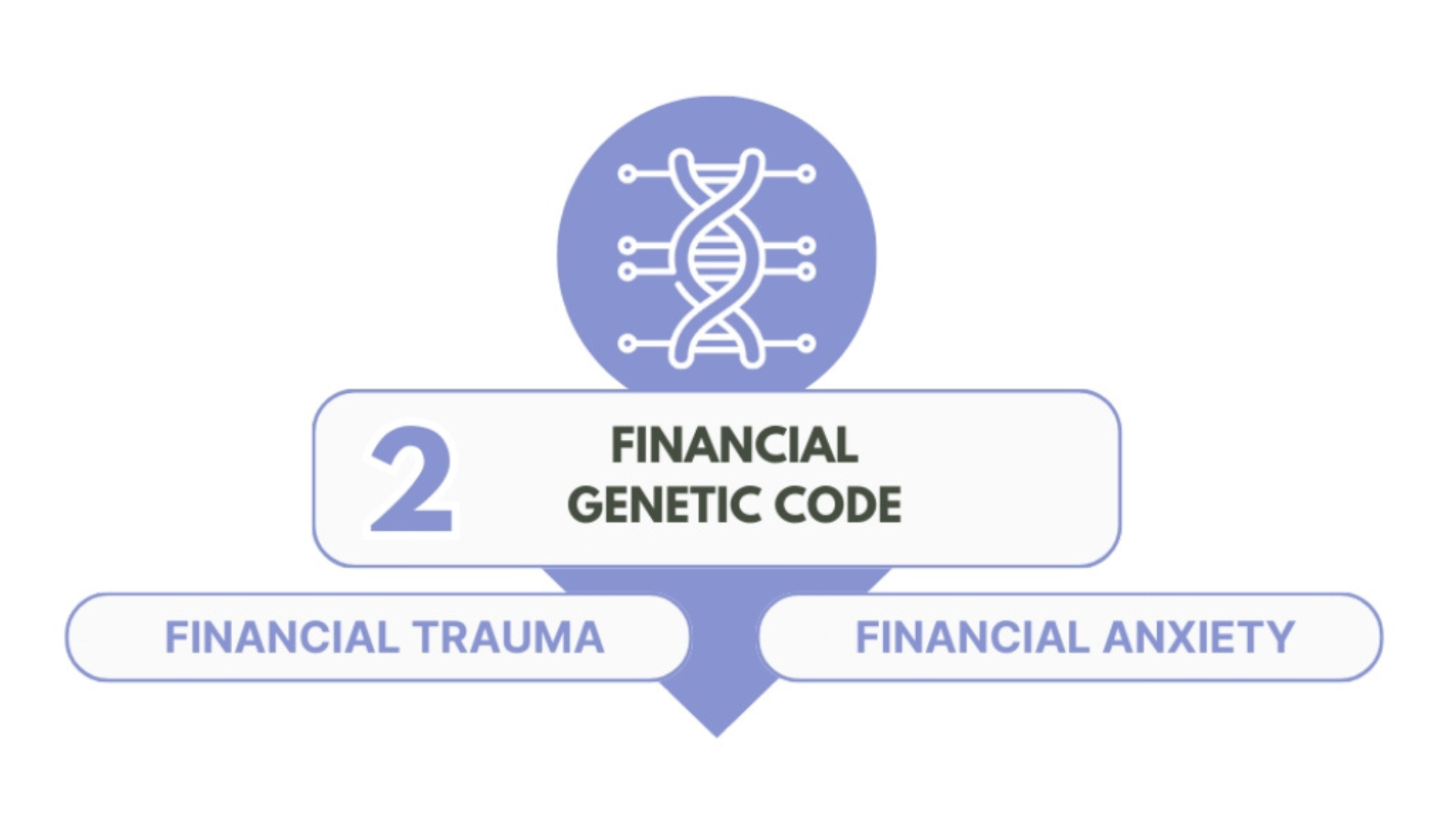
In the Generational Wealth Model, we address Financial Genetic Code™ in Stage 2, where we break down the makeup of your financial system that is holding you back from creating healthier and more sustainable financial decisions moving forward. Your Financial Genetic Code™ affects many other aspects of your life, including how you interact with others.
In this article, we are going to dive deeper into what Financial Genetic Code™ are and how they affect your relationships so that you can understand why it’s so important to address your financial makeup before it negatively impacts your interpersonal relationships.
What Is a Financial Genetic Code™?
Your financial genetic code™ is a product of all of your internal and external ecosystems (Stage 1 of the Generational Wealth Model). All of the factors, both “walls-in” and “walls-out”, alter the financial moves and decisions you make going forward.
Internal Aspects
Internally, early experiences and learned behaviors influence your psychological framework around money. If you grew up in a household where money was a source of stress or conflict, you might internalize anxiety about financial matters. These early experiences can create a subconscious link between money and negative emotions, leading to financial trauma.
Financial trauma can manifest as a fear of spending, compulsive saving, or avoiding important discussions around finances. If your parents argued frequently about money, you might develop a tendency to avoid financial discussions in your own life, out of fear of conflict or judgment.
In addition to financial traumas, personal experiences such as job loss, debt, or financial instability can create lasting imprints. A history of financial instability might cause you to approach money with a scarcity mindset where you are constantly worrying about not having enough.
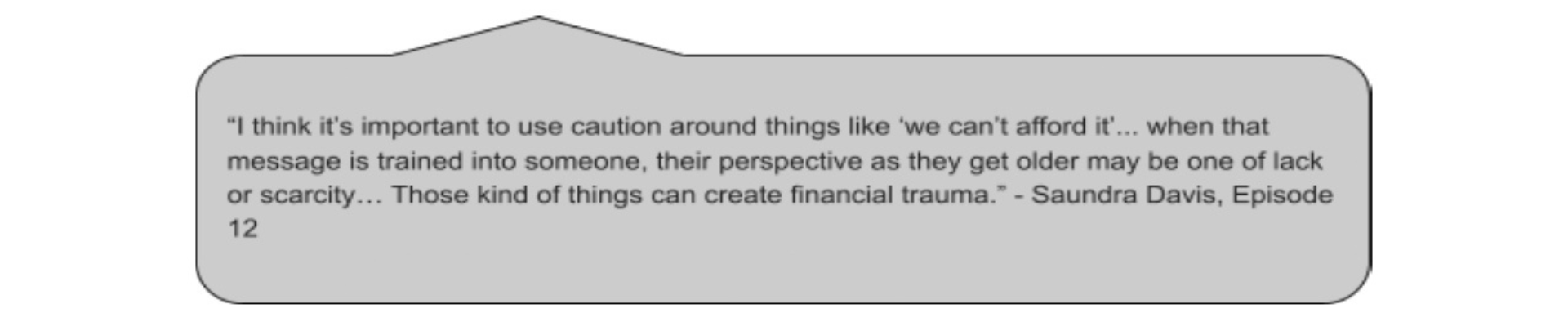
This can lead to you making anxiety-driven financial decisions like hoarding money or avoiding necessary expenses, which can impact your quality of life and financial health.
External Factors
From an external perspective, societal pressures and cultural norms significantly impact how you view and manage money. In a culture that tends to equate success with wealth, there can be immense pressure to achieve financial milestones within a particular timeline.
This societal expectation can lead to behaviors like overspending, taking on excessive debt, or pursuing high-risk investments in an attempt to keep up with perceived standards of success in other words keeping up with the Joneses — or maybe the more contemporary acronyms FOMO (Fear of Missing out) — has been a lightning rod in this spectrum promoting materialism and instant gratification, which can lead to poor financial decisions and increased debt.
In Episode 11 of the New Wealth Wave Podcast, Rahkim Sabree, AFC® tells us “There’s a lot of anxiety and shame associated with not having money… If that was part of your lived experience… there is this innate desire to distance yourself from that reality as fast and as far as you can”
Family dynamics are another crucial external factor. The financial behaviors modeled by parents and relatives often set the stage for your own money habits. If your family was saving and investing wisely, you might adopt similar practices. On the other hand, however, if your family had poor financial habits, you might struggle to break free from those patterns.
Economic landscapes and societal events, such as recessions or job market fluctuations, also impact your financial views. Witnessing a recession or other economic catastrophes can create a sense of financial insecurity, even when things become more stable. This can lead to a heightened fear of financial risk and an overly cautious approach to money management.
All of these internal and external factors work together to influence how you interact with money throughout your life. By shaping your mindset and behaviors, these factors – by extension – mold you as an individual. Thus, your Genetic Financial Code is formed.
How Does Your Financial Genetic Code™ Affect Your Relationships?
The way you view and interact with money, influenced by both internal and external ecosystems, can significantly impact your relationships. Financial behaviors and attitudes shaped by a combination of personal experiences, family dynamics, and societal pressures often carry over into your interactions with others going forward. This can affect trust, communication, and overall relationship dynamics.
Financial traumas and anxieties
Your personal history with money can create financial traumas and anxieties that affect your relationships. If you have experienced financial instability or stress in the past, you may bring those anxieties into your partnerships.
This can manifest as a reluctance to share financial responsibilities, a fear of financial dependence, or a desire to avoid joint financial planning. If you grew up in a household where money was a constant source of conflict, you may avoid discussing finances with your partner. This can lead to misunderstandings and hidden financial issues in your relationship.
Trust and Communication
Trust is a cornerstone of any healthy relationship, and financial transparency is crucial in building that trust. If you harbor financial anxieties or traumas, you may find it challenging to be open about your financial situation. This lack of transparency can create a rift between you and your partner, leading to feelings of betrayal or mistrust – if these financial secrets come to light.
Communication about money is another critical factor in relationship dynamics. Your Financial Genetic Code™ shapes how you discuss and manage finances with your partner. If you have a scarcity mindset as a result of past financial traumas, you may prioritize saving and be reluctant to spend on shared experiences, which could lead to conflicts over financial priorities.
In friendships and familial relationships, your financial outlook can greatly affect interactions. Financial success or hardship can change up the dynamics, potentially causing envy, guilt, or resentment. Open communication and empathy are essential in maintaining healthy relationships, despite financial differences.
Final Thoughts
The way you view and interact with money, shaped by your internal and external ecosystems, can drastically impact your relationships. Financial traumas and anxieties can influence trust, communication, and shared financial decision-making. By understanding and addressing these influences, you can build healthier, more transparent, and supportive relationships, fostering mutual respect and understanding.
To learn more about the Generational Wealth Model, listen to the New Wealth Wave Podcast or check me out below!
Want to learn more about Dr. Joquin Wallace and The Generational Wealth Model